Wednesday, November 09, 2016

Why I Hope to Vote for Donald Trump in 2020

There has possibly been no political contest in my living history that I have felt more strongly about than this one, so the result that Donald Trump has been elected as President is really devastating. These aren't quite my first thoughts on this, because I had to get up, see my kids off to school, take my youngest to a doctor's appointment ... you know, the stuff of living that actually matters, far more than this political stuff.

But the political stuff matters, too, when people's healthcare, and their family's marital status, or ability to stay in this country, or the integrity of their control over their own bodies are on the line.

At about 10:50 last night, the results were coming in were devastating, and I convinced my wife to go to sleep rather than suffer through hours of stress watching the results come in.

I woke up at 4:00 am (because my phone went crazy with a bizarre series of junkmail texts) and saw that Donald Trump had won ... and could not get back to sleep.

I have been fundamentally wrong at every stage in this election, sure that the Republicans would nominate a reasonable candidate, and then sure that the American people would reject the man they eventually chose. I clearly had too much faith in the American people to make the moral choice - yes, the moral choice - in this election. I was wrong about what America would do.

Now, I find myself in the position of hoping that I am wrong. I truly hope that I'm wrong about the character of Donald Trump, that I have misinterpreted his statements that were strategic attempts to gain support and do not represent his actual views. I hope that he will be a centrist, with conservative economic policies and a concern for individual civil liberties.

I remember reading about President Bush's first advice to Barack Obama:
Trust yourself. And know that ultimately regardless of the day-to-day news cycles and the noise that the American people need their president to succeed, regardless of political party.
We are in the position where Donald Trump, along with the Republicans, have the run of the table. And, as much as I loathe the way he has run his campaign, and indeed his whole life, and the way the Republicans have handled themselves the last 8 years, I cannot wish the government abject failure.

Americans need a government that succeeds. We need economic and tax policies that promote jobs and growth. We need a President who can deftly maneuver the various threats to our national security and national interests.

And, much as I loathe President-Elect Trump's rhetoric during the campaign, I hope he rises to the challenge. I hope that the White House brings out the very best in him, in fact that he leads in such an exemplary fashion that in four years, when he runs for re-election in 2020, it is not primarily among rural white voters that back him, but that he has broad approval among women and African-American, LGBT, urban, and Latino populations, and that he has earned that because his policies are really working, and he's proven himself to be a thoughtful man with deft leadership.

I doubt this will happen ... but I truly have never hoped to be wrong more in my life.

Friday, February 19, 2016

On Scalia: Letter to Dan Coats

In this February 16 interview, Indiana Senator Dan Coats said that he didn't believe President Barack Obama should nominate a replacement for Justice Antonin Scalia. Here is the point he made, in particular:
“I think that ought to be put to the American people and let them decide who they want to be their president and who they want to nominate,” Coats said. “But at that point, that person has to be evaluated in a non-partisan way, in my opinion. Does he have the experience? Does he or she have the criteria to be a justice? The temperament?"
He isn't alone. There's been a slew of this talk from Republicans, and some Republicans have actively broken ranks to say that Congress should do its job, including the definitely-not-pro-Obama Tea Party governor of Maine. While I'm willing to attribute this behavior strictly to political opportunism, and a real fear about losing strong conservative voices on the court, some have attributed far more sinister motives to the call.

The end result of all this, for me, was the following letter to Indiana Senator Dan Coats:
Dear Senator Coats,  
I was disappointed to read today that you had publicly expressed the desire to push off a decision on a Supreme Court nominee until after the election. In the interview you claimed that this was a desire that it "ought to be put to the American people and let them decide who they want to be their president and who they want to nominate."  
It occurs to me that this question has indeed been put to the American people twice, in 2008 and 2012. I voted for President Obama in both cases, but I'm non-partisan, and in each election I seriously considered all of the candidates. I intend to do so again this year, but I will confess that this sort of obstructionism on the part of Republicans is troublesome to me. If Republicans have a hope of winning over enough moderate voters in a general election to win the White House, they have to convince the American people that they can actually govern. 
In this case, that means allowing President Obama - whom the American people decided twice to be their president - to perform his duties for the fourth year of his second elected term. What it seems to me you are actually saying in the above quote is that you feel uncomfortable with the decision the American people made in 2012 and hope they make a different one this year. You are certainly free to be uncomfortable with it, but your Constitutional duty as a Senator is clear. If President Obama puts forth a qualified nominee, and Republicans obstruct it on purely political grounds, I suspect it will cast a very poor shadow on Republican prospects among moderates in the general election.  
I know it will for this moderate.  
Thank you for your time. 
I don't know if this sort of thing ultimately has any impact, but it seems good to have one's voice heard. You can leave a message for Indiana Senator Dan Coats here.

Thursday, December 31, 2015

2015 Books Read

End of the year, so time for my annual accounting of books consumed for 2015!

The 2015 Book List
  1. Libriomancer by Jim C. Hines (reread)
  2. The Martian by Andy Weir
  3. Arctic Rising by Tobias Buckell
  4. Codex Born by Jim C. Hines (reread)
  5. How We Learn: The Surprising Truth About When, Where, and Why It Happens by Benedict Carey
  6. America's Bitter Pill: Money, Politics, Backroom Deals, and the Fight to Fix Our Broken Healthcare System by Steven Brill
  7. Out of My Later Years: The Scientist, Philosopher, and Man Portrayed Through His Own Words by Albert Einstein
  8. Unbound by Jim C. Hines
  9. Abraham Lincoln: A Presidential Life by James McPherson
  10. The Just City by Jo Walton
  11. The Divide: American Injustice in the Age of the Wealth Gap by Matt Taibbi
  12. The Future of the Mind: The Scientific Quest to Understand, Enhance, and Empower the Mind by Michio Kaku
  13. Does Santa Exist?: A Philosophical Investigation by Eric Kaplan
  14. Thinking About Cybersecurity: From Cyber Crime to Cyber Warfare by Prof. Paul Rosensweig (The Great Courses)
  15. On the Plurality of Worlds by David Lewis
  16. Terrorists in Love by Ken Ballen
  17. Orthodoxy by G.K. Chesterton
  18. Beyond the God Particle by Leon Lederman & Christopher Hill
  19. The Android's Dream by John Scalzi
  20. Lock In by John Scalzi
  21. Less Doing, More Living: Make Everything In Life Easier by Ari Meisel
  22. Death of a King by Tavis Smiley
  23. How to Win an Election: An Ancient Guide for Modern Politicians by Quintus Tullius Cicero & Philip Freeman
  24. The Pluto Files: The Rise and Fall of America's Favorite Planet by Neil deGrasse Tyson
  25. Genius: The Life and Science of Richard Feynman by James Gleick
  26. The Clockwork Universe: Isaac Newton, the Royal Society, and the Birth of the Modern World by Edward Dolnick
  27. The Quantum Moment: How Planck, Bohr, Einstein, and Heisenberg Taught Us to Love Uncertainty by Robert P. Crease and Alfred Goldhaber
  28. The Time Machine by H.G. Wells (reread)
  29. The Practicing Mind: Developing Focus and Discipline in Your Life - Master Any Skill or Challenge by Learning to Love the Process by Thomas M. Sterner
  30. Animal Farm [audio dramatization] by George Orwell
  31. The Science of Liberty: Democracy, Reason, and the Laws of Nature by Timothy Ferris
  32. Gemini Cell by Myke Cole
  33. The Evolution of God by Robert Wright
  34. Mastermind: How to Think Like Sherlock Holmes by Maria Konnikova
  35. Finding Your Element: How to Discover Your Talents and Passions and Transform Your Life by Ken Robinson and Lou Aronica
  36. Behavioral Economics: When Psychology and Economics Collide by Prof. Scott Heuttel (The Great Courses)
  37. Scientific Secrets of Self-Control by Prof. C. Nathan DeWall (The Great Courses)
  38. Writing Monsters: How to Craft Believably Terrifying Creatures to Enhance Your Horror, Fantasy, and Science Fiction by Philip Athans
  39. A Beautiful Mind by Sylvia Nassar
  40. Love in the Age of Mechanical Reproduction: A Novel by Judd Trichter
  41. The Death of Ivan Illyich by Leo Tolstoy
  42. Monster by A. Lee Martinez
  43. Heroes and Legends (The Great Courses) by Prof. Thomas Shippey
  44. Forged: Writing in the Name of God - Why the Bible's Authors Are Not Who We Think They Are by Bart D. Ehrman
  45. The Philosopher Kings by Jo Walton
  46. Gentlemen Scientists and Revolutionaries: The Founding Fathers in the Age of Enlightenment by Tom Shachtman
  47. The Picture of Dorian Gray by Oscar Wilde
  48. Leviathan Wakes by James A. Corey
  49. The Theological Origins of Modernity by Michael Allen Gillespie
  50. A History of Western Philosophy by Bertrand Russell
  51. Between the World and Me by Ta-Nehisi Coates
  52. Among Thieves by Douglas Hulick
  53. The Strange Affair of Spring-Heeled Jack by Mark Hodder
  54. The Sacredness of Questioning Everything by David Dark
  55. Off to Be the Wizard by Scott Meyer
  56. Spell or High Water by Scott Meyer
  57. Islam and the Future of Tolerance: A Dialogue by Sam Harris and Maajid Nawaz
  58. The Scorch Trials by James Dashner
  59. An Unwelcome Quest by Scott Meyer
  60. Emperor Mollusk Versus the Sinister Brain by A. Lee Martinez
  61. Fable: Blood of Heroes by Jim C. Hines
  62. How Ideas Spread (The Great Courses) by Jonah Berger
Breakdown

Format:
  • Audiobooks: 45
  • Kindle: 10
  • Dead tree books: 10
Subjects:
  • Total Fiction: 25
    • Classics: 4
    • Science Fiction: 12
    • Fantasy: 14
      • Urban/Modern Fantasy: 9
      • Young Adult: 
      • Steampunk: 1
  • Non-Fiction: 37
    • Science: 17
      • Physics: 7
      • Psychology: 8
      • Biology: 1
      • Technology: 2
      • Math/Statistics: 1
    • Religion: 12
    • History: 15
    • Politics: 11
    • Education: 4
    • Economics: 6
    • Business: 2
    • Philosophy: 11
    • Humor: 1
    • Writing: 2
These numbers don't quite match up, because some books cover multiple areas, and so I've included them in all relevant categories. So, for example, a book on free will would fall in both Psychology and Philosophy (and possibly even Religion) categories.

Similarly, some books I read using Whispersynch-for-Voice to jump between the Amazon Kindle and Audible audiobook versions of the books, so they got double-counted in the format section. I've also included The Great Courses audios that I listen to through Audible.com. Though not actually books, I figure that a 10+ hour course on a subject contains about the same informational content, if not presented structurally in quite the same way as it would take in a written book.

The History

And for anyone who is interested in looking into the past to see some of my previous book lists...
Prior to 2008, I didn't keep a precise running record of the books that I read.

Thursday, October 15, 2015

Science and the Big Bang Theory: Richard Feynman's van

The Feynman family with the family van.
From its first joke, CBS' The Big Bang Theory has proven adept at mixing humor and science. Many of the science jokes hinge on comprehending the subtleties of quantum physics in the Shrodinger's cat thought experiment (or making a self-aware lack of comprehension), but some are not about scientific concepts themselves, but jokes that focus on the culture of science.

For example, in a previous episode, Sheldon took Amy to a book signing by noted theoretical physicist and author Brian Greene, specifically so that he could heckle Greene for attempting to demystify string theory in a language accessible to the common, non-scientist reader. Science communicators and scientists ranging from Nobel Laureate George Smoot to Bill Nye to Stephen Hawking have made cameo appearances on the show.

In the handful of episodes this season, the direct scientific references have been slim, but there's been one notable scientific cameo. Not by a scientist, though, but by his family van.

Since Leonard and Penny eloped in the last season finale/premiere, the guys hadn't gotten a chance to throw Leonard a bachelor party. To make up for it, they decide to drive down to Mexico (abducting Sheldon to bring him along, although one has to wonder why they would ruin their weekend in this fashion and not just leave him behind). And the vehicle they use for their bachelor party road trip was a van that had belonged to Richard Feynman.

Richard Feynman was the famed CalTech physicist, filling the gap of popular face of physics between the eras of Albert Einstein and Stephen Hawking. He worked on the Manhattan Project, was one of the key figures in developing quantum electrodynamics (for which he received the 1965 Nobel Prize in Physics), inspired the fields of nanotechnology and quantum computing, and famously demonstrated the likely reason for the Space Shuttle Challenger disaster with a glass of ice water. Feynman had a big personality, as well, and is as well known for the strange stories about him as for his physics. He became known as a safe cracker at Los Alamos during the Manhattan Project and played bongo drums at strip clubs, to name just a couple of his unusual hobbies.

And his van is, to my knowledge, the only real vehicle that has been repeatedly mentioned in physics books. (The Enterprise and the Batmobile probably have been referenced.)

Though not explained in the episode, Feynman's van is famous in physics circles because of the curious squiggly markings on the outside of the vehicle. These look random, but they're actually diagrams used in physics to describe the quantum interactions of particles. They are, to the physics community at large, called "Feynman diagrams." Though he displayed uncharacteristic humility in avoiding calling them by this name, he was very proud of their creation, as they were a key tool in comprehending the quantum electrodynamics interactions that he had defined mathematically. He was so proud, in fact, that he detailed his van with these Feynman diagrams.

The van was restored recently, and the show note at the end of the episode does indicate that it was actually Feynman's van that was used in the episode, not a replica ... a scientific cultural icon that became part of a popular culture icon. (Despite the events of the episode, we are assured that the real van survives intact.)

Episode 9.3: The Bachelor Party Corrosion
Air date: October 5, 2015

Thursday, April 02, 2015

The Religious Beliefs of Corporate Persons


I still think the Catholics should go with this
more-inspiring sigil for the modern age.
Back in 2012, well before it occurred to me that a corporation could be said to have religious beliefs, I commented on the idea of "corporate personhood."  I focused on this idea at length in that post, but recent events have made it worth looking at again.


Indiana RFRA and Corporations

In the 2010 Citizens United decision, the Supreme Court decided that these corporate entities had the ability for unlimited, unregulated political speech, which can also be made behind a mask of secrecy about the funding sources. And in the 2014 Hobby Lobby decision, it was made clear that, at least for "closely-held corporations," they also had religious liberties.

This was recently codified into law in my home state of Indiana, as part of the controversial Indiana state-level version of the Religious Freedom Restoration Act, which resulted in widespread concerns about discrimination of LGBT members. I happen to agree that the original wording of the law would have given some additional support for this sort of discrimination (which is already legal in Indiana, actually, due to no anti-discrimination protections for LGBT groups).

In comparing the Indiana and federal RFRA statutes, one difference that stands out is Section 7.3. In this section it seems that the Indiana law specifically sets very broad definitions of what sorts of organizations/institutions may make claims of having religious freedoms burdened, broader than the "closely-held corporation" rule from the Hobby Lobby decision:
(3) A partnership, a limited liability company, a corporation, a company, a firm, a society, a joint-stock company, an unincorporated association, or another entity that:
(A) may sue and be sued; and 
(B) exercises practices that are compelled or limited by a system of religious belief held by: 
(i) an individual; or 
(ii) the individuals; 
who have control and substantial ownership of the entity, regardless of whether the entity is organized and operated for profit or nonprofit purposes.
The question this leaves open is whether courts interpret the above wording as applying only to closely-held corporations, as the Supreme Court ruled for the federal RFRA under the Hobby Lobby case. Nothing in the wording above indicates to me any such limitation as being an inherent part of the law, so I think corporations can at least argue that the limitation doesn't apply. If a publicly-traded entity is owned 51% by people who want to invoke a claim under RFRA, it would seem like it should be allowed under this wording. A non-closely-held corporation that wants to exercise these sorts of religious interests is free to, at least, make the argument that they should be able to under the Indiana RFRA, in a way that they couldn't under the federal RFRA.

This is followed up by the other major difference between this legislation and others, which is Section 9:
Sec. 9. A person whose exercise of religion has been substantially burdened, or is likely to be substantially burdened, by a violation of this chapter may assert the violation or impending violation as a claim or defense regardless of whether the state or any other governmental entity is a party to the proceeding. If the relevant governmental entity is not a party to the proceeding, the governmental entity has an unconditional right to intervene in order to respond to the person’s invocation of this chapter.
It seems that when applying the federal RFRA, there has been dissent within the courts about whether protected religious liberty can be claimed in a private dispute between individuals or not. The clear and unquestioned intended goal of RFRA was to provide defense of religious activity from government regulation, from what I can tell. Its use of the phrase "and obtain appropriate relief against a government" can be interpreted as restricting its claims to those of the government, or of including the government among those relief can be sought from. Different circuits have ruled different ways in this.

The wording of the Indiana law under Section 9 makes it explicitly clear that protections of religious liberty can be invoked in disputes between private individuals ... which, in conjunction with Section 7.3, would seem to mean that corporations can invoke religious liberty defenses in completely private disputes.

Against Corporate Personhood

This attribution is false, but I like the quote
and don't feel like changing the graphic.
Here's how I, as a small business owner of a sole proprietorship that operates without corporate protections and have looked into whether I need those protections, view the way a corporation functions:
A corporation is an entity that is used to perform an act on behalf of an individual or individuals, in a way that isolates the individual from harm. Should an individual attempt to use a corporation to perform an act, retribution strikes the corporation rather than the individual. The corporation may be terminated only by bankruptcy or willful dissolution, but is otherwise immortal. Even if terminated in this way, it may pass its essential essence along to another entity which, in most particulars, may function as essentially identical to the original entity in service of the owner. The person behind the corporation is unharmed, except by the inconvenience of having to create a new entity.
Gamers and fantasy readers will recognize this:
It is a construct of some kind, possibly a necromancer's undead minion, a golem, a wizard's homoculous, or some other kind of summoned/crafted proxy creature. In Shadowrun, it would be Rigger's robotic drone (or a corporation, since they have those in Shadowrun too).
So, essentially, we now have immortal non-human entities with the ability to amass wealth for unlimited political speech and able to invoke religious beliefs in disputes with other people and corporations.

I do not think this is a good outcome.

Because, simply put, corporations are not people.

The corporation does not, as a corporation, possess the ability to have a religious belief or conviction, it can only express the religious beliefs and convictions of the owners. Any claim to religious liberty, and the ability to exercise religious liberty, is only as a second-hand consequence of the rights held by the individual who runs the corporation. Those rights are protected for the individual, and may be protected as expressed through a corporation, but the corporate entity itself does not possess those rights.

There may be many perfectly valid reasons for supporting the broad freedom of corporations to serve as the means of expressing personal liberties held by their owners, but corporate personhood is not among them.

You'll hear all kind of people quoting nonsense about how corporations are people, but this diminishes the richness and complexity of what it means to be a person. It is offensive in every way, and as a rhetorical tool needs to end.

Wednesday, December 31, 2014

2014 Books Read

End of the year, so time for my annual accounting of books consumed. (Out of deference to my lovely wife, I will not say "books read," because nearly half were in audiobook format.) Here are the books I consumed in 2014.

The 2014 Book List
  1. The Cats of Tanglewood Forest by Charles de Lint
  2. The Righteous Mind: Why Good People are Divided Over Religion and Politics by Jonathan Haidt
  3. The Republican Brain: The Science of Why They Deny Science--And Reality by Chris Mooney
  4. A History of God: The 4,000-Year Quest of Judaism, Christianity, and Islam by Karen Armstrong
  5. Embracing Your Best Self by Nancy Zimmerman
  6. Our Mathematical Universe: My Quest for the Ultimate Nature of Reality by Max Tegmark
  7. An Inquiry into the Nature and Causes of the Wealth of Nations by Adam Smith
  8. The Gifts of Imperfection: Let Go Of Who You Think You're Supposed to Be and Embrace Who You Are by Brene Brown
  9. Who's in Charge?: Free Will and the Science of the Brain by Michael S. Gazzaniga
  10. Doubt: A History - The Great Doubters and their Legacy of Innovation from Socrates and Jesus to Thomas Jefferson and Emily Dickinson by Jennifer Hecht
  11. Blue Like Jazz: Nonreligious Thoughts on Christian Spirituality by Donald Miller
  12. The Happiness Advantage: The Seven Principles of Positive Psychology that Fuel Success and Performance at Work by Shawn Achor
  13. Sticks and Stones: Defeating the Culture of Bullying and Rediscovering the Power of Character and Empathy by Emily Bazelon
  14. Pathfinder Tales: The Redemption Engine by James L. Sutter
  15. The Heart and the Fist: The Education of a Humanitarian and the Making of a Navy SEAL by Eric Grietens
  16. Living the Quaker Way: Timeless Wisdom for a Better Life Today by Philip Gulley
  17. Quantum Mechanics: The Theoretical Minimum by Leonard Susskind and Art Friedman
  18. The Psychopath Test By Jon Ronson
  19. A First-Rate Madness: Uncovering the Links Between Leadership and Madness by Nassir Ghaemi
  20. My Brief History by Stephen Hawking
  21. Civil Disobedience by Henry David Thoreau
  22. Walking by Henry David Thoreau
  23. Fuzzy Nation by John Scalzi
  24. The Secrets of Happy Families: Improve Your Mornings, Rethink Family Dinner, Fight Smarter, Go Out and Play, and Much More by Bruce Feiler
  25. Utilitarianism by John Stuart Mill
  26. Novum Organum (The New Organon) by Francis Bacon
  27. The World As I See It by Albert Einstein
  28. The God Engines by John Scalzi
  29. Mark Twain's Helpful Hints for Good Living: A Handbook for the Damned Human Race by Mark Twain 
  30. The Beginning of Infinity: Explanations That Transform the World by David Deutsch
  31. Inferno by Dan Brown
  32. Shadow Ops: Breach Zone by Myke Cole
  33. I Am Not a Serial Killer by Dan Wells
  34. A People's History of the United States: 1492 to Present by Howard Zinn
  35. How Jesus Became God: The Exaltation of a Jewish Preacher from Galilee by Bart Ehrman
  36. The Adversary by Erin M. Evans
  37. Shadows Beneath: The Writing Excuses Anthology by Brandon Sanderson, Mary Robinette Kowal, Dan Wells, and Howard Tayler
  38. The Island of Knowledge: The Limits of Science and the Search for Meaning by Marcelo Gleiser
  39. The Maze Runner by James Dashner
  40. An Enquiry Concerning Human Understanding by David Hume
  41. The Last Stormdancer by Jay Krisoff
  42. Kinslayer by Jay Kristoff
  43. Waking Up: A Guide to Spirituality Without Religion by Sam Harris
  44. Pathfinder Tales: Stalking the Beast by Howard Andrew Jones
  45. Pathfinder Tales: Reign of Stars by Tim Pratt
  46. The Teacher Wars: A History of America's Most Embattled Profession by Dana Goldstein
  47. Ignorance: How It Drives Science by Stuart Firestein
  48. Time Machines Repaired While-U-Wait by K.A. Bedford
  49. Invisible: Personal Essays on Representation in SF/F edited by Jim C. Hines
  50. San Diego 2014: Last Stand of the California Browncoats by Mira Grant
  51. Farewell to Reality: How Modern Science Has Betrayed the Search for Scientific Truth by Jim Baggott
  52. The Innovators: How a Group of Hackers, Geniuses, and Geeks Created the Digital Revolution by Walter Isaacson
  53. The Slow Regard of Silent Things by Patrick Rothfuss
  54. The Reaver by Richard Lee Byers
Analysis

Format:
  • Audiobooks: 26
  • Kindle: 19
    • Kindle Singles (mini-books/novellas/solo essays): 2
  • Dead tree books: 10
Subjects:
  • Total Fiction: 18
    • Mystery/Thriller: 1
    • Science Fiction: 6
    • Fantasy: 12
      • Urban/Modern Fantasy: 2
      • Traditional Fantasy: 7
      • Young Adult: 1
      • Steampunk: 2
  • Non-Fiction: 36
    • Science: 19
      • Physics: 8
      • Psychology: 10
      • Biology: 3
      • Technology: 1
      • Math/Statistics: 1
    • Religion: 12
    • History: 11
    • Politics: 8
    • Education: 3
    • Economics: 1
    • Business: 2
    • Philosophy: 17
    • Humor: 1
    • Writing: 2
These numbers don't quite match up, because some books cover multiple areas, and so I've included them in all relevant categories. So, for example, a book on free will would fall in both Psychology and Philosophy (and possibly even Religion) categories.

Similarly, some books I read using Whispersynch-for-Voice to jump between the Amazon Kindle and Audible audiobook versions of the books, so they got double-counted in the format section.

The History

And for anyone who is interested in looking into the past to see some of my previous book lists...
Prior to 2008, I didn't keep a precise running record of the books that I read.

Thursday, September 11, 2014

Religion, ISIS, Atheist Hypocrisy, Confirmation Bias, and Tribalism

"Symbols of Religions".
Licensed under Creative Commons
Attribution-Share Alike 3.0 via Wikimedia Commons
Several recent atheist commentators have rightly condemned ISIS, citing it as an example of religion gone horribly wrong. But then they go further, using the example of ISIS to condemn religion as a whole. Is this a valid move? If not, then why not? And what clues, if any, does the activity of ISIS give us about religion as a whole?


Atheists Condemning Religion via ISIS

The theologian Randal Rauser has one of a handful of Christian blogs that I find quite fascinating and worth following, if only irregularly. I haven't been following it long and though he seems to focus a bit more attention on apologetic-style arguments than I tend to appreciate, he does so in a clever and fair manner, with pleas for nuance that are often missing from most others of that ilk.

Rauser recently posted a brief article called "If we all reasoned like the atheist ideologue" which made an excellent point, but I think did so in an incredibly unilluminating way. In it, Rauser attacks the notion that ISIS's mere existence is an example of problems caused by religion:
In the last few weeks the internet has seen a flurry of armchair analysis by atheistic ideologues offering their ruminations on ISIS. Desperately short in their understanding of the geopolitical, social, cultural and historical factors at play in the Middle East, they sashay into the hornet’s nest and opine that the problem is “religion”.
Rauser doesn't link directly to any such commentary, but here's one that I saw on Lawrence Krauss' Facebook feed that I think fits the bill.
"ISIS is a barbaric reminder: no such thing as a religion of peace, certainly not in Islam today nor Judaism and Christianity throughout history." (link)
Now, I am a fan of Lawrence Krauss - in both the Facebook and more general sense. I've read (and reviewed) his books for years. I interviewed Lawrence Krauss last spring, at a showing of his film The Unbelievers, and got my first edition of The Physics of Star Trek autographed. But, as Krauss himself often points out, there are no authorities in science, only experts ... and as such I am not in any sense obligated to agree with everything he says.

So I absolutely disagree with Krauss's point that there is "no such thing as a religion of peace." First of all, it's not true as a stand-alone statement, because many examples of peaceful religions can be found (and warlike non-religious teachings).

But even in the context of ISIS - a group of people that clearly hold to a barbaric, non-peaceful religious viewpoint - the line between evidence and conclusion is tenuous here. The barbarity of ISIS is so extreme that it actually serves to highlight how benign most Islamic interpretations are. Pointing at a clearly-aberrant example as if it were normative is not something you can do!

It is this second issue that Rauser focuses on (again, in general ... he doesn't specifically cite the Krauss comment):
What if we all adopted this degree of inane, ideologically driven analysis? What would the world look like?
For starters, if a woman cut you off in traffic, you wouldn’t blame her. Instead, you would conclude that women shouldn’t drive cars, period.
And if your neighbor’s boy damaged your flower garden while attempting to earn a skateboarding badge for Boy Scouts, you’d conclude that youth organizations should be abolished.
And if your son twisted his ankle doing track and field, you’d cast a pall on all youth sporting events.
And if you had a bad dinner at the local Chinese restaurant, you’d eschew all Chinese (or better yet, all “ethnic”) food.
This is the degree of absurdity we are dealing with when folks with little-to-no understanding of ISIS and the complex geopolitical, social, cultural and historical factors at play in Syria and Iraq offer their absurdly crass analysis that the problem is intimately related to “religion”.
I have two main points about Rauser's attack.

  1. His examples are incorrect.
  2. He doesn't explain the actual problem (which is far worse, I think, than mere crassness).

The examples all show a case where a single piece of evidence leads to an extreme general conclusion. This is known as the hasty generalization fallacy, and Rauser is right that it would be a real problem ... if that were the actual fallacy being committed in these cases.

But it's not. How do we know? Because Rauser has himself identified these people as "atheist ideologues," which suggests that these are established people who have already concluded that atheism is the proper way of viewing the world and religion is problematic. They may have committed the hasty generalization fallacy at some point in the past, but having read several books by these people, it's clear that it's not nearly as hasty as Rauser's examples suggest. They didn't look at one piece of evidence against religion and arrive at a generalization that religion was a problem. Rauser just wrote a 15-part review of a biography of a man who abandoned religion for atheism, so he presumably knows there's more than one piece of evidence at work here, which means this is easily classified as a straw man fallacy.

But there is a serious problem here, although it's not actually a logical fallacy per se, so much as a methodological fallacy. It is, in my opinion, one of the worst cognitive errors that we have to deal with in our search for a better understanding of the world: Confirmation Bias.


Confirmation Bias and Religion

Confirmation bias is the tendency to give more weight or significance to results or evidence that confirm an already-established opinion than we do to evidence that contradicts that opinion.

In this case, the error that the atheists are making in pointing to ISIS is that they are being very selective in the evidence they look at. Again, go back to the Krauss quote. He points to ISIS as a barbaric reminder that there is no religion of piece, but in doing so clearly ignores the many pieces of evidence that suggest religions are peaceful. You don't even have to leave Islam to find far more peaceful Muslims - and Muslims who say that their peaceful acts are motivated by their religious faith - than Muslims who are driven by hate toward violence.

And, as a scientist, Krauss certainly knows about confirmation bias. One of the major goals of the scientific enterprise is to minimize it. And he pretty much mocked poor confirmation bias on the religious side, quite deftly, here.

This is the real irony of Rauser's attack, for me, because confirmation bias is for me the largest problem with religion.
My issue with religion is not a fundamental rejection of mystical or supernatural influences, but rather that religion adopts a methodology in which confirmation bias is not only allowed, but encouraged.
My strongest evidence for this view comes in the central role of testimony in religious life. Outside of intellectual circles, religion is largely affirmed, in day-to-day worship, by anecdotal testimonies to the role of God in one's life. As someone who has spent most of his life on the outside of religion, I cannot tell you the number of times someone has tried to explain to me how God has actively transformed their life. They were an alcoholic or an abusive husband and then they got right with God, and they felt a transformation come over them, and this is proof of God's existence.

I attended an evangelical church for a time that was particularly intriguing in this regard, with relatively common testimonies from the congregation. For some context: the minister of this church had once been a construction worker, fell off the fifth story of a building, landed face-first on cement, and despite being so bad that doctors assumed he would die, he somehow walked out of the hospital about a week later. And, during his convalescence, he had a vision of Jesus. So it's absolutely understandable that this particular church put a lot of faith in testimony. (To date, I have no reason in particular to doubt the man's claims about the series of events. Nor, though I don't agree with his explanation, can I particularly fault him for attributing miraculous significance to them.)

Testimonies from others were far less impressive, but still moving and significant. They were stories about how turning to Christianity and handing their life over to God made real differences in their lives. At one point, a man talked about how God had cured him of diabetes and helped him stop smoking. At another point, around Christmas time, a woman talked about how money was tight and she was going to have to avoid paying important bills so she could get clothes and gifts for her children. At the register, however, the scanner had some sort of malfunction, and the clothes came up much lower than expected. I don't remember the particulars, but I think the clothes came up for a few cents apiece, and the woman ended up saving over a hundred dollars all told.

If you stripped away all testimony of this kind from all religions, it's not clear to me that much religion would be left. There might be some logical arguments that would have impressed Aristotle fans, but religions wouldn't be living, breathing entities that influence lives directly in this world.

But every single one of the testimony examples above is a glaring case of confirmation bias. If you were to sit down and think, "How could I discern the real truth of religious experiences?" then you could hardly construct a worse methodology of doing it than asking people of faith when something good happened in their life that they felt was attributed to God. (I encourage you to try, in the comments section.)

The difference, of course, is that religious people do not, by and large, know about confirmation bias. As such, they can absolutely be forgiven for not taking steps to avoid it. Atheists, on the other hand - particularly active secularists, skeptics, religious critics, and "atheist ideologues" - absolutely know about confirmation bias. Using ISIS as a bludgeon to confirm your views without proper respect for the counter-argument is, either consciously or not, absolute hypocrisy.


What Can Be Said About Religion and ISIS?

It is perfectly valid, however, to point at ISIS as an example of how religion can lead someone to do horrible things. In a recent interview, even the Muslim moderate Reza Aslan admits that this is a logically valid interpretation of Islam (though not one that he agrees with).

But if an atheist is going to attack religion, they need to be sure that they are placing ISIS within a much broader context of why religions produce these sorts of negative outcomes. This is hard to do in a tweet or a Facebook status update, of course, or even in a blog post. As Rauser points out: the various non-religious factors leading to ISIS' rise are very complex.

One person who I think has a firm grasp of this nuance, though isn't always necessarily the best at getting it across, is the atheist Sam Harris. His post today, "Sleepwalking Toward Armageddon," is characteristic of his balance of respect for Islamic people together with disdain for the dogmatic extremism that he feels comes from religion:
Which will come first, flying cars and vacations to Mars, or a simple acknowledgment that beliefs guide behavior and that certain religious ideas—jihad, martyrdom, blasphemy, apostasy—reliably lead to oppression and murder? It may be true that no faith teaches people to massacre innocents exactly—but innocence, as the President surely knows, is in the eye of the beholder. Are apostates “innocent”? Blasphemers? Polytheists? Islam has the answer, and the answer is “no.” 
[...] I would not want to create the impression that most Muslims support ISIS, nor would I want to give any shelter or inspiration to the hatred of Muslims as people. In drawing a connection between the doctrine of Islam and jihadist violence, I am talking about ideas and their consequences, not about 1.5 billion nominal Muslims, many of whom do not take their religion very seriously.
Then he launches into what I think is the absolutely proper point about religion that atheists should be making, if they are inclined to draw a larger point out of ISIS:
Religion produces a perverse solidarity that we must find some way to undercut. It causes in-group loyalty and out-group hostility, even when members of one’s own group are behaving like psychopaths.
Generally speaking, I think it's safe to say that religion is one of the most persistently tribal elements of our modern world. Although religious teachings that encourage conflict don't help, my view (and, to some degree, apparently Harris') is that it is really the particular group affiliation, and self-identification that so often comes with it, that create the strife we want to avoid.

Indeed, Rauser himself seems to recognize that this is the problem. When returning to deal with criticism that religion can exacerbate conflict, he points out that so can patriotism. But isn't that precisely because patriotism often, like many religious teachings, exacerbate the "in-group loyalty and out-group hostility" that Harris is specifically condemning?

Look at the standard array of non-religious atrocities from the 20th century, which theists are so fond of justly rolling out to prove that religion isn't the sole source of atrocities: Stalin, Pol Pot, Mao, forced eugenics, social darwinism. (They sometimes throw Hitler in there, but calling Hitler non-religious is a bit of a fudge.) Aren't all of these means of creating and enforcing tribalist structures? Throw in a healthy dose of authoritarianism, and you've got a recipe for disaster, even without adding supernatural religious beliefs and heavenly rewards to the mix.

My instinct is to side with Harris' statement a bit, though, that religion tends to exacerbate this situation. When your "in-group" includes God and the "out-group" rejects God, how could it do anything but exacerbate the situation? Certainly, I personally know of no individuals who want full-scale war in the Middle East more than a handful of fundamentalist evangelical Christian acquaintances who believe that it is both inevitable and will usher in the return of Jesus.

But then again, that might be confirmation bias, so I will hold off rather than make a hasty generalization fallacy.

Sunday, September 07, 2014

10 Most Personally Influential Books

First, let me say that I've done this before, back in 2008, so here's a link to that list (although please ignore all of the begging to join BookWise ... it was a clever book-oriented multi-level marketing system which, sadly, did not survive the digital age).

As you can see, the lists are a bit different. In some cases, I've found other books by the same authors which resonate on those themes with me more deeply, so I consider them a bit more influential. In other cases, I've realized that I was influenced in some different ways that weren't evident several years ago.

The books are organized in roughly the chronological order that I read them, to the best of my memory, along with a description of why I found them so influential.

It should also be noted that the most influential book in my own life would have to be String Theory For Dummies, but I assume it's ineligible.

  • Foundation by Isaac Asimov - The first science fiction novel that I can remember reading. I fell in love instantly. I read literally dozens of Asimov's fiction and non-fiction books throughout my teenage years.
  • Les Miserables by Victor Hugo - This novel taught me some of the best elements of theme, character, and drama in storytelling. The 40-page description of the Battle of Waterloo, just so that the last page could have a scene relevant to the plotline, also taught me some things to avoid. 
  • Ender's Game by Orson Scott Card - A book about brilliant youths, read at a very impressionable time in my life. For a generation of science fiction geeks, this was our version of Tom Sawyer.
  • Hyperspace: A Scientific Odyssey Through Parallel Universes, Time Warps, and the 10th Dimension by Michio Kaku - While much of my early interest in science was cultivated by the non-fiction work of Isaac Asimov, this book introduced me to the concept of string theory and helped foster my interest in the full scope of theoretical physics. When my own book on string theory was published, I was interviewed by Dr. Kaku on his Science Fantastic radio program!
  • Darwin's Black Box: The Biochemical Challenge to Evolution by Michael Behe - This book introduced me to the modern culture wars surrounding science and religion, which has fascinated me ever since. I'd never encountered a scientifically-literate pro-Creation argument from an intelligent, articulate author before ... my only experience with creationists were of the very ignorant, often redneck, young-Earth variety. Though subsequent reading quickly showed that most of Behe's "challenge" was easily debunked, this set me on the road to giving these debates more serious attention.
  • Calculating God by Robert J. Sawyer - In addition to being a great book, it introduced me to Robert J. Sawyer, who quickly became one of my favorite authors. Both his fiction itself and his teaching on fiction writing have helped me realize that science fiction is the literature of philosophy.
  • Five Lessons a Millionaire Taught Me About Life and Wealth by Richard Paul Evans - I was briefly involved in a book/publishing-oriented multi-level marketing business. It never took off the ground and folded within about a year, but this book by the founder really influenced how I thought about money and even my writing career.
  • Misquoting Jesus: The Story Behind Who Changed the Bible and Why by Bart Ehrman - As a teenager, the idea of the Bible as a historical document was established when I read Asimov's Guide to the Bible, but then I got busy and didn't really give the Bible much thought for about a decade. In the wake of my interest in the science v. religion wars, this book was my re-introduction to the Bible. It was also the book I was reading when I met my wife. I recall discussing it (since about the only thing I knew about her was that she was a Christian) on our first date and she's indicated that I impressed her on that date, so it had influence far beyond anything expressly contained within its pages.
  • Hacking Work: Breaking Stupid Rules for Smart Results by Bill Jensen & Josh Klein - Certainly the most pragmatic book on the list, this made me realize that the rules put in place in a business don't exist for the benefit of doing the work well, but so that management can manage the work. Since reading it, I have focused more on figuring out how to get work done well than how to follow the rules.
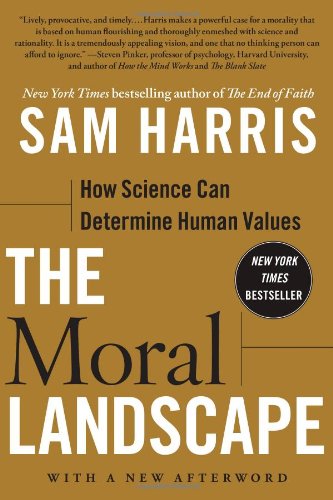
  • The Moral Landscape: How Science Can Determine Human Values by Sam Harris - Made me realize that it was possible to be a secular person without being required to be a moral relativist. This was my post-college re-introduction to moral philosophy.

Honorable mentions

I tried above to list the books that set me on a new intellectual course or modified my existing course, and didn't list multiple books that had similar effects. For example, I actually found Bart Ehrman's God's Problem a more significant book than Misquoting Jesus, but not in a way that made me look at anything in a new fundamentally new way. The below books were also highly influential, but usually in a way that resonated with the influences of the earlier books. They helped propel me upon a course I was already on, rather than providing any modifications to the path:

A Tale of Two Cities by Charles Dickens
Stranger in a Strange Land by Robert Heinlein
Childhood's End by Arthur C. Clarke
Fahrenheit 451 by Ray Bradbury
Asimov's Guide to the Bible by Isaac Asimov
To Kill a Mockingbird by Harper Lee
Speaker for the Dead by Orson Scott Card
Dragonlance: Legends Trilogy by Margaret Weiss & Tracy Hickman
Good Omens by Neil Gaiman & Terry Pratchett
The Tao of Pooh & The Te of Piglet by Benjamin Hoff
Finite and Infinite Games by James P. Carse
A Mind At a Time by Mel Levine
The Last Temptation of Christ by Nikos Kazantzakis
The Science of God by Gerald Schroeder
The Language Police by Dianne Ravitch
The Terminal Experiment by Robert J. Sawyer
Ender's Shadow by Orson Scott Card
Out of Our Minds: Learning to Be Creative by Sir Ken Robinson
God's Problem: How the Bible Fails to Answer Our Most Important Question - Why We Suffer by Bart Ehrman
Excuses Begone by Wayne Dyer
Man's Search for Meaning by Viktor Frankl
Outliers: The Story of Success by Malcolm Gladwell
Zero: The Biography of a Dangerous Idea by Charles Seife
The Predictioneer's Game: Using the Logic of Brazen Self-Interest to See and Shape the Future by Bruce Bueno de Mequita
The Evolution of Faith by Philip Gulley
Grace by Richard Paul Evans
What Technology Wants by Kevin Kelly
The Righteous Mind: Why Good People Are Divided by Politics and Religion by Jonathan Haidt
Lying by Sam Harris
Free Will by Sam Harris

Monday, August 25, 2014

Physicists Aren't the Only Ones Who Trash Philosophy

Buy at Amazon
So, I was reading some philosophy tonight. I finished David Hume's An Enquiry Concerning Human Understanding, which - at the end of a book with no abstract reasoning of quantity or number or really any experimental reasoning - has the following as the final lines:
If we take in our hand any volume; of divinity or school metaphysics, for instance; let us ask, Does it contain any abstract reasoning concerning quantity or number? No. Does it contain any experimental reasoning concerning matter of fact and existence? No. Commit it then to the flames: for it can contain nothing but sophistry and illusion.
In other words, by the strictest interpretation of Hume's own conclusion, his own book should be committed to the flame. (One could argue that there is some generally experimental reasoning going on in the book, of course, but still ... it's an amusing contradiction.)

After finishing this book, I moved on to the philosopher and mathematician Bertrand Russell's Our Knowledge of the External World as a Field for Scientific Model in Philosophy. It, in turn, starts with the following line:
Philosophy, from the earliest times, has made greater claims, and achieved fewer results, than any other branch of learning.
Russell's point, of course, is that he feels he can set the record straight and get philosophy back on course ... but still, the quote is just charming on its own.

There's been a flurry of criticism lately for some physicists - specifically Stephen Hawking, Lawrence Krauss, and Neil deGrasse Tyson - who have made some outspoken (and unwise) comments against philosophy. While I generally disagree with their dismissal of the value of philosophy, I do find it amusing that similar criticisms come from prominent figures within philosophy as well ... and that I stumbled on two similar comments within a couple of minutes of each other.

Wednesday, August 13, 2014

My Pitch for an Aquaman Movie

So this may become a thing. I really enjoyed the mental exercise of pulling together my pitch for Ghostbusters III, and the buzz on the internet recently about the possibility of an Aquaman movie (see here, here, and here) has gotten my creative juices flowing. They have two different writers developing scripts, though, and it's very easy to see how an Aquaman movie could go wrong.

I have a fair amount of experience with Aquaman. For a while in my mid-twenties, I played on Zero Hour MUX, an online, text-based roleplaying game that was built around the DC Comics setting. Getting one of the major DC characters required an application. Green Arrow was taken ... so I applied for Aquaman, and got it. So, from one standpoint at least, I'm a bit of an Aquaman expert.

One major problem that DC has always had with their films is one that Marvel has gotten well beyond: DC seems to still think that "superhero" is a genre. It's not. Superheroes are heroes with powers, but there are a lot of different types of heroes, they have different types of adventures, and these result in different types of films.

This is obvious from the Marvel films. The first two Iron Man films, though a bit repetitive in tone, are basically industrial suspense films with a high dose of action. Iron Man 3 is a mix of mystery and techno-thriller. Captain America is a WWII period film. Captain America 2 is a political thriller. Thor is a trans-dimensional redemption story. Thor 2 is a fantasy quest. The upcoming Ant-Man film is a heist with superpowers.

The key thing is this: all of these movies (except perhaps Iron Man 2) would have been interesting stories in their own right, even if not tied to the franchise.

So, here is how I would handle the Aquaman set-up and major thematic elements:
Intro: The film begins with a man (Tom Curry) in a lighthouse, looking out into the ocean during a storm. He sees something and, racing down to the beach, finds a woman lying on the rocks. She is a beautiful blond woman, but is injured. A head injury. The man carries her into the lighthouse and tends to her wounds. As he tends to her wounds, the camera focuses in on a coral necklace around her neck. In the center is a piece of coral that is shaped in the symbol of an "A" ... which transitions into the "A" in the Aquaman logo to cue credits. 
After credits, two kids are revealed: a 10 year old blonde named Arthur and a slightly younger brunette boy named Orm. It is dawn and they are playing in the water. Arthur is waving a large trident-looking stick around, pretending he's fighting off some generic bad guys. Orm is waving around a smaller stick, pretending to be a wizard. 
Orm dares Arthur to jump off a high rock into the water. Arthur does it and vanishes into the waves. He's under water for a while. Orm gets terrified and jumps in after him. He hits the water, but panics as he swims around looking for Arthur. Orm sinks, rolled by a wave. Right as he's about to crash into a rock, Arthur darts out of the water and pulls him up out of the way. The boys run back toward the lighthouse, past their mother (a brunette, and not the woman from the intro sequence), who is watching television and making breakfast. 
Tom Curry, a decade older than pre-credits, is busy getting dressed. The kids are running around, creating havoc. The wife enters the bedroom in shock. "You've got to see ... Come here." He comes into the living room, looks at the television, and collapses onto a chair as he stares, dumbfounded, at the television. The kids run in and stop, sensing that something serious has happened. Pan to the television: images of the Twin Towers attack. Pan back to Orm, whose expression is one of fear and confusion, and Arthur, whose expression is more grim determination. 
The origin story focuses on the following or incorporates following elements: 
  • Arthur grows to believe that the society of the surface world is corrupt and destructive. Maybe he has this view from outside as an anti-government environmental terrorist or inside the system as a Navy SEAL or some other background or combination.
  • In mid-twenties, Arthur learns that his mother was an Atlantean queen (and gets her necklace from her father). He goes to Atlantis hoping for a utopia, fed up with the surface world.
  • Orm wants to go with Arthur, but can't (unable to breathe water). Establish the jealousy aspect, though Orm is not an enemy in this film.
  • Arthur discovers corruption within the Atlantis government. He leads a "man of the people" style rebellion against the Atlantean aristocracy - so the bulk of the film has a very Braveheart or Spartacus (or, you know, Conan the Barbarian) feel to it, complete with a dramatic rousing speech to unite the people of Atlantis together. In order to protect his new people, he must become the king, taking charge of the very system that he previously railed against. 
  • Arthur's powers in the film include: breathing underwater, superstrength, damage resistance, enhanced hearing/limited sonar, telepathically communicate with aquatic life, a vague "water sense," gains Atlantean trident before end of film.
  • Establish that he weakens longer away from water. Not fatally (like Kryptonite) but enough that if he got shot after being out of water for a while, he could easily die. While in water, he is virtually invincible (but so are other Atlanteans) to anything but Atlantean magical weaponry.
  • Atlantean magic plays heavily in the corrupted part of the government. At some point, Arthur needs surface help he can trust and enlists Orm, who is thus exposed to Atlantean magic. In fact, Arthur encourages him to learn enough that he can first magical bolts that can harm Atlanteans.
  • Possibly introduce Aqualad (but don't call him that). Other potential allies from Aquaman's team "The Others" can be introduced.
The one problem with this concept is that it has a lot of parallels with Thor, but they're almost inverse connections. The Arthur/Orm relationship is one where Arthur is elevated above Orm, even though Orm views himself as the "rightful" son, while the Thor/Loki relationship is one where Loki has always known that Thor was heir to the throne. Thor is banished from his kingdom; Arthur comes to his kingdom for the first time and must claim his throne. So, while there are some similarities, there are also some pretty significant differences.

Again, I want to remind Hollywood that I am more than willing to consult or perform a script doctoring role on this project. Just drop me a message.

Wednesday, August 06, 2014

My Pitch for Ghostbusters III

Okay, I am really sick and tired of reboots. I've reached my limit, and the idea that there might be a reboot of the classic Ghostbusters is enough to push me over the edge.

For a while, there have been rumors of another sequel that introduced a new team. This, however, is different. It's a reboot. And, in fact, the rumors are of a reboot with an all-female team, which seems a bit gratuitous. Yes, I want a strong female presence in the show, but an all-female team? That's just going too far in the other direction, I think, for no good story-based reason that I can think of.

This article in Vanity Fair does make a fair point in favor of the move, though: an all-female team completely distances itself from the original group.

That having been said, though, here's a pitch for a new sequel that would distance itself from the original:

Pre-Credit Sequence: 
First, I would pretty much take the pre-credit sequence from the pitch offered via Twitter by Max Landis (screenwriter of Chronicle). This ties into the original film through Slimer and Ivo Shandor. As a reminder, Ivo Shandor is the architect who built Dana Barrett's building in the first film.
Introduction 
Post-credits, we would cut to the present day, at a funeral. I've actually got several ideas of how this funeral could go, depending on who is willing to return from the original film, but we'll go with this: it's Egon's funeral. There are very few attendees. (Landis also mentioned Egon passing away in his Twitter-pitch, but not a funeral.)
One of the attendees is a young twenty-something girl, Cassandra Tully. Cassandra wears glasses and is socially awkward, in part because she is the daughter of Janine and Louis Tully. (I'm hoping that either Rick Moranis or Annie Potts, or both, would be willing to return for a small role.)  Cassandra is a young lawyer and/or paralegal working with her parents, who are now lawyers, and are also executors of Egon's estate.
Arriving late at the funeral is Oscar Barrett. (Dana's baby from Ghostbusters 2. He would be in his late 20s.) He is there because he was contacted about an inheritance. If any of the original Ghostbusters (or Weaver) are there, they are also included in the will. 
Oscar's inheritance consists of a set of research books. They are sitting on Egon's desk in a box labeled "Print is dead." At this point, some exposition can be dropped explaining that the Ghostbusters broke up after stopping Vigo the Carpathian, in part because there just weren't enough ghosts to keep the business in operation.
Oscar has no idea why he would be left these books, but Cassandra explains that upon looking through them she found that one of the books is a notebook with Barrett's name in a geneology. On the page, the audience can see that Oscar's great-grandfather is named Ivo Shandor.
While gathering together the books, Oscar finds a black box with yellow stripes on it and a cord that has a button on the end. A ghost containment trap. He pushes the button ... thus releasing a ghost that Egon (for whatever reason) was keeping in his study. 
Cassandra and Oscar are now stuck in the position of having unleashed a ghost. Depending on who from the original cast is available to offer some tips, they might be able to trap it rather easily, or might need to figure out on their own how to use the equipment, possibly involving some research and recruiting help to get the equipment to work.
Overall Plot
In trying to figure out how the technology works, Cassandra and Oscar recruit an engineer to try to help. The science behind the equipment is a bit beyond the engineer, so they enlist the help of the engineer's theoretical physicist roommate. (At least one of these two should be female. Note that since we already have Cassandra as the research geek, neither of these characters should fit an "egghead" cliche. I once heard Eliza Dushku mentioned in reference to this project. She's too old to play Cassandra, and doesn't really fit the concept, but would be excellent in one of these roles.)
The books that Oscar inherit contain information about how Shandor completed a ritual that turned him - and his descendants - into particularly good demonic vessels. This was done with the purpose of resurrecting Gozer, but Vigo the Carpathian tried to make use of it as well. The Ghostbusters were able to stop them both times. 
Before dying, Shandor wrote a prophecy about Gozer's return. Gozer would come to this realm, but be pushed back. At that point, all "lesser spirits" would be contained within a structure that Shandor built. (Not all spirits, obviously - thus Ghostbusters 2 - but enough to explain why Ghostbusting ceased being a profitable business model after 1984.) After an appropriate amount of spiritual energy was contained within this structure, Gozer would return again. Egon's notebooks contain calculations indicating that this critical threshold should be reached soon.
The group, therefore, is not focused on building a ghostbusting business, but rather on getting just enough ghostbusting equipment and skill to prevent Gozer from returning and taking possession of Oscar. It's not their job (yet), though the film ends with them having averted Gozer's return, but destroyed Shandor's "structure" and made it so that the "lesser spirits" are freed. Thus, there is now a need for Ghostbusters ... and, after all, who ya gonna call?
Again, the key here is that this team is completely different from the original one, and thus won't be directly compared to them. My pitch doesn't even require New York City as a setting, which was pretty key in both of the original films. The group likely wouldn't even end up in their jumpsuits until about the end of the movie. There could obviously be more connections to the original film, if desired. The Ecto-1 could be cooling it in someone's garage, or they could have a new ride. The Ghostbusters business *could* even still be in operation, with the headquarters at the firehouse, and the bulk of the plot could remain intact.

Each person fulfills a distinctive necessary role, but those roles are different from in the original film:
  • Cassandra - Research expert and has probably already knew about Ghostbusters from parents
  • Oscar - Clueless, demon vessel
  • Engineer - Understands the technology
  • Theoretical Physicist - Figuring out the science, particularly the trans-dimensional aspects. At some point utters the line, "Back off man. I'm a scientist."
Thus the issues from the Vanity Fair article are dealt with, a completely revitalized franchise is established, but without the need for a reboot. (Seriously, Hollywood, feel free to use this. All I ask for is an invitation to the premiere! Although I'm willing to be a consultant!)

Thursday, July 03, 2014

5 More Patriotic Videos for Independence Day

A couple of years ago, I posted a list of 5 patriotic shows for Independence Day. Here's another 5 to add onto that list:

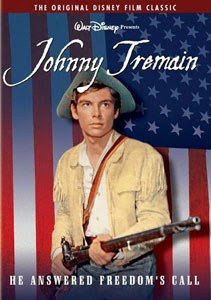
Johnny Tremain (Amazon)


This film is based on a classic children's novel, about a young boy who gets swept up in the American revolution. One thing I really enjoyed about this film as a boy was that it did an excellent job of depicting the day-to-day life of the colonies. I'm sure that artistic license is (as always) used, but it was the first time that I realized that businesses didn't open on Sunday (the sabbath) and just generally how different the world was back then in a variety of different ways, both large and small.

John Adams (Amazon)


This HBO mini-series provides a detailed look at one of the central figures in the American revolution and the second President of the United States. Starring Paul Giamatti as John Adams and Laura Linney as his wife, Abigail Adams. It's based on the comprehensive biography by David McCullough. Adams defended the British soldiers who were accused of the Boston Massacre, but later - guided by the same principles of justice - became one of the strongest voices in support of American independence. As an HBO series, it's a bit grittier than a lot of other depictions of the revolutionary period, but given how romanticized this period can be in many accounts, it's good to balance it with a dose of grit.

Captain America: The First Avenger (Amazon)


No list of patriotic movies would be complete without including Captain America. Though not set during the period of the revolution, the film drips with the most admirable patriotic qualities. The training scenes, where it becomes clear why the 90-pound-weakling named Steve Rogers is selected to become Captain America, really speak as to the importance of character.


The Crossing (Amazon)


This is a great film starring Jeff Daniels as George Washington and recounting his famous crossing of the Delaware River. What the film does an excellent job of making clear is how absolutely hopeless the situation was and how defeat was essentially guaranteed at nearly every moment along the way, but Washington continued to persevere. It contains excellent lessons in leadership.

Ben and Me (Amazon)


Based on an engaging children's book, this cartoon depicts the friendship between Benjamin Franklin and a young mouse. I learned about most of Dr. Franklin's accomplishments first through this fun story, and have subsequently found him to be one of my favorite historical figures.

In addition, here are some classic patriotic moments from the interwebs and popular culture:

And, of course, the links from the previous post:

Tuesday, June 03, 2014

My Entry in Sam Harris' Moral Landscape Challenge

Buy at Amazon
Several months ago, I submitted a piece to an essay competition put forth by neuroscientist, author, and atheist moral philosopher Sam Harris. Motivated by the anniversary of his publication of The Moral Landscape, Harris called out a challenge to readers to refute his argument. The winner would receive $200 and, if successful in convincing Harris he was wrong, would receive $2,000!

I did not win. Today, Harris has published the winning essay, by Ryan Born, and it's quite good. Far better than mine! And written by a professional philosopher, which does make me feel better about losing. I quite like Born's blog, Point of Controversy, so am happy to have discovered his work.

Here is the challenge itself, and also some responses to Harris' critics, which are informative.

My own essay is embedded later in this blog post. But first, some thoughts on the enterprise ...

Background on The Moral Landscape

The Moral Landscape is quite possibly one of the most significant books that I've ever read, at least as far as my personal belief system. Prior to reading it, I would have classified myself as a moral relativist. Having abandoned the idea of an absolute law-giver, passing down moral certitudes from on-high, this seemed to leave me with little other philosophical option than a post-modern dismissal of all moral systems as inherently relative.

This is not, of course, to say that I was immoral while I held this view. As with most people, I didn't need a firm philosophical grounding to run my day-to-day life. In fact, with the exception of a few faltering instances, I have always held a viewpoint that being good to others, treating them with respect and dignity, and similar actions were generally the best way to be. In short, I didn't actively reject many of the more widely-held moral truths coming from "absolute" moral systems, but I did reject the basis for those moral truths. I felt better in a world where these moral truths were the ones accepted, so I supported them as the relative moral truths to be adopted - both personally and by society at large. After all, with no definitive moral truths in place, moral relativism allows you to be selective in this way. Both its benefit and its curse.

Then I read The Moral Landscape and realized that I was not, in fact, a moral relativist! Harris describes his basic claim as follows:
Morality and values depend on the existence of conscious minds—and specifically on the fact that such minds can experience various forms of well-being and suffering in this universe. Conscious minds and their states are natural phenomena, fully constrained by the laws of the universe (whatever these turn out to be in the end). Therefore, questions of morality and values must have right and wrong answers that fall within the purview of science (in principle, if not in practice). Consequently, some people and cultures will be right (to a greater or lesser degree), and some will be wrong, with respect to what they deem important in life.
This was very much in line with some of my own thinking, dating back to 2004, when I began considering whether it was reasonable to discuss "evil" with reference to objective facts about the world, rather than in reference to some set of rules passed down from a deity. (I discuss this in a previous post ... though I don't think I ever got around to the promised follow-up which fleshed out my thinking on the idea.)

Refuting The Moral Landscape

As anyone who knows me can tell you, though, I am good at picking out flaws in things, and I think that particularly applies to lines of reasoning. Since I see flaws in pretty much any line of reasoning, this isn't usually a dealbreaker, so long as the flaws are dealt with honestly. Anytime I find something I like, it's with a few side helpings of salt to deal with the parts I find problematic.

The first and most glaring flaw in The Moral Landscape is that it was immediately apparent to me that the sub-title, "How Science Can Determine Human Values," promised too much. Nothing in Harris' book actually tells you that science can, in and of itself, give you the basis of moral truths. That is to say: The decision "I want to be moral, and that means enhancing well-being" is itself outside of science.

Now, once you've made that decision, I agree with Harris that pretty much everything else that follows can be evaluated and improved, if not outright dictated, through a scientific form of investigation. His sub-title would have been more honest if it had been "How Science Can Determine Actions Properly in Accord with Human Values" ... but this is a far weaker claim and it's even weaker than Harris himself claims to make. Within the book, he says (with emphasis from the original text):
First, I want to be very clear about my general thesis: I am not suggesting that science can give us an evolutionary or neurobiological account of what people do in the name of "morality." Nor am I merely saying that science can help us get what we want out of life. These would be quite banal claims to make--unless one happens to doubt the truth of evolution, the mind's dependency on the brain, or the general utility of science. Rather I am arguing that science can, in principle, help us understand what we should do and should want--and, therefore, what other people should do and should want in order to live the best lives possible. My claim is that there are right and wrong answers to moral questions, just as there are right and wrong answers to questions of physics, and such answers may one day fall within reach of the maturing sciences of mind.
The emphasis on "should" here can be taken one of two ways. If by "should" it means "if you want to be moral, then you should do this" then I think Harris well supports his claim. If by "should" it means "science can tell you that being moral is what you should do" then I do think Harris has set his goal a bit too high. These two meanings of "should" are at the heart of the "ought from is" arguments, I think, which often come into these conversations. (In his response to critics, Harris identifies this as "The Value Problem," and it is this aspect which the winning essay focuses upon.)

His comparisons to health and nutrition seem to offer help here. Strictly speaking, science doesn't tell us that we want to be healthy and well-fed. We want to be healthy and well-fed for non-scientific reasons, and then science tells us how we should behave to reach that goal. The negative aspect of these comparisons is equally compelling, though, as I see no reason to believe that a science of morality wouldn't be just as prone to senseless fads as health and nutrition have been!

Though that was the most glaring issue, it was also one that I largely considered irrelevant. For my essay, I used a different line of attack. I attempted to construct a scenario in which every seemingly objective of increasing well-being was met ... but the situation clearly violated a deeply-held moral sentiment, which is present across a wide range of moral belief systems (including, one presumes, Harris' own).

In other words, I tried to create a counter-example. Using Harris' own reasoning, I described a situation where a clear violation of morality would drive society toward an objective peak on the moral landscape. This isn't foolproof ... it can easily be refuted by just saying, "Well, then, that's not actually a violation of morality, is it?" But committing to that means abandoning the notion of personal autonomy as an inherent moral virtue, and I was gambling that would be too high a price for Harris to pay when confronted with it. So I thought it was a pretty good argument.

Here is the essay itself. Please feel free to offer your thoughts in the comments.

The core argument of The Moral Landscape is that morality and values rest upon well-being and suffering within this world, as a consequence of natural phenomena. While I largely agree with this definition, I feel that it is not fully sufficient to define moral values in this way. In other words, I argue that there are valid moral values which do extend beyond the strict facts of the situation in regard to suffering and well-being, and though they can (and should) be informed by the facts, they cannot be fully resolved by reference to those facts.

Consider this situation involving two men, Daniel and Richard1, with the following features:

  • Daniel’s kidneys are failing and he is about to die.
  • Richard has two functioning kidneys.
  • Richard is the only compatible donor for Daniel who can donate in time to save his life.
  • They are the same age and roughly similar in a variety of ways (i.e. there’s no way to deem that one is more “useful” than another)
  • Richard is healthy and the doctor indicates that donating his kidney will not diminish his well-being in any way.
  • Richard is undergoing surgery anyway, in such a way that donation of the kidney will not add any suffering or duration to his recovery, nor make his prognosis worse.
On the basis of your definition of morality (and indeed by most definitions of morality), the most moral outcome is for Richard to donate a kidney to Daniel, thus saving his life. The situation is entirely positive-sum in regard to well-being. 

Richard, however, decides not to donate the kidney, and has no moral reasoning to support this decision. He just doesn’t want to donate the kidney. By doing this, he is increasing suffering of a conscious creature in a very real, observable way. Daniel will die because of his choice. 

However, I believe that many moral systems would claim that we are morally obligated to respect Richard’s decision, despite the increase in suffering that results and our ability to potentially classify Richard’s decision as immoral. If a doctor decides to go ahead and remove the kidney during Richard’s surgery, despite his lack of consent, it would be viewed as a morally incorrect act, despite the fact that it saved Daniel’s life. 

But why? It seems to me that the moral hazard here comes from dismissing moral values of bodily ownership and consent, challenging the use of well-being/suffering as the one and only standard of morality. These would seem to be moral values that supersede the objective well-being of conscious creatures (or, at the very least, also comes into play in a scenario such as this). 

There are some similarities between this and the trolley problem. In The Moral Landscape, you mention how fMRI scans indicate emotional centers triggered in the second scenario, when the fat man is thrown in front of the trolley. The most common interpretation of these results has to do with the confrontational nature of the act, but that confrontation doesn’t take place here. The doctor is not attacking Richard, but is already performing surgery on him. The strictly positive-sum nature of the scenario I’ve outlined seems to make the morality of stealing the kidney unambiguous, from the standpoint of our thesis. 

Lest we be concerned about the possibility of an out-of-control Orwellian state (a valid consequentialist objection), let’s be clear that the doctor and everyone involved are extremely moral people, and they respect individual rights. They all swear (and brain scans indicate they’re telling the truth) that they would only ever use this method in an situation where the most advanced moral scientific investigations tell them that well-being will be objectively advanced (and/or suffering diminished). There will be careful oversight to insure that this process is never applied in any other context. 

Even with the above consideration, I would hold that there is something morally objectionable about the violation of Richard’s bodily rights, which suggests a value beyond well-being at play here. Not just a value that is difficult in practice to tie back into well-being, but rather a value that is fundamentally different in principle from that which is derived strictly from a well-being assessment. 

Now, one could argue that we hold the values of consent and bodily ownership themselves on the basis of broadly-defined principles of well-being (and I would tend to agree with this), but if well-being is in fact the basis upon which the values gain their moral credibility, we acknowledge that instances where a life is in danger, it’s okay to violate personal autonomy. For example, we are usually morally justified to restrain a person who is a danger to others. We would seem to be similarly morally justified to side with the doctor and steal Richard’s kidney, using it to save Daniel’s life.

And if the violation of consent and bodily ownership is justified in this situation, then it would seem to be justified in all other situations where well-being could be enhanced by violating another’s rights - especially in a positive-sum way, where no suffering is created at all. We of course would want to be very careful about applying this to guarantee that there is not inadvertent suffering, but in principle (if not in practice) this sort of scenario would seem a perfectly valid peak within the moral landscape … and, in fact, to the degree that moral science is successful, it would even seem to drive society up the moral landscape.

1 These names were chosen in reference to two other prominent atheist authors, Richard Dawkins & Daniel Dennett, who along with Sam Harris and the late Christopher Hitchens, comprise the "4 Horsemen of the Apocalypse," or the center of the "New Atheist" movement.